
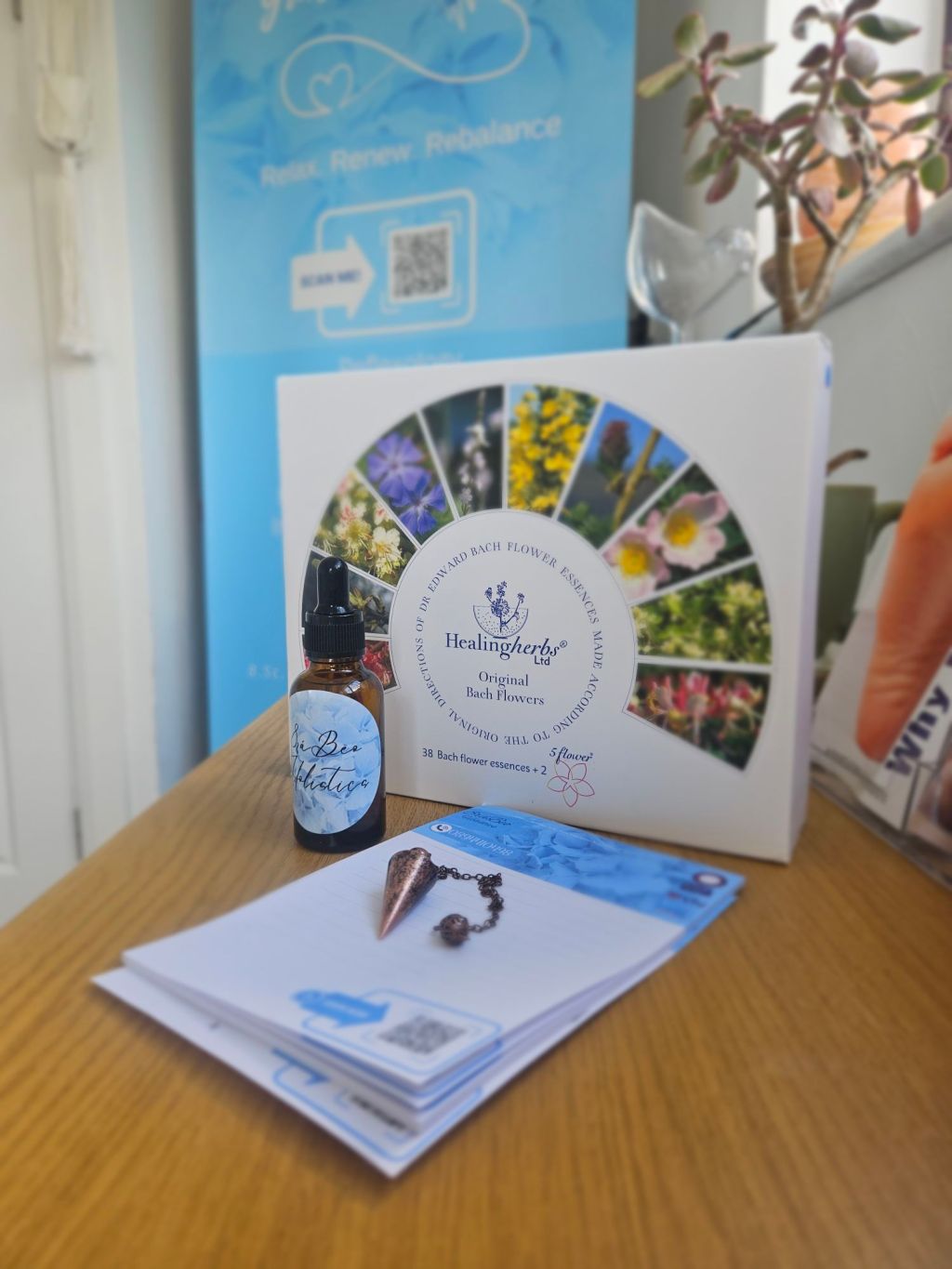
From using Rescue Remedy during school exams to exploring the full Bach Flower kit with my family and clients today, I’ve been continually amazed at how these gentle, flower-based remedies can support a wide range of emotions.
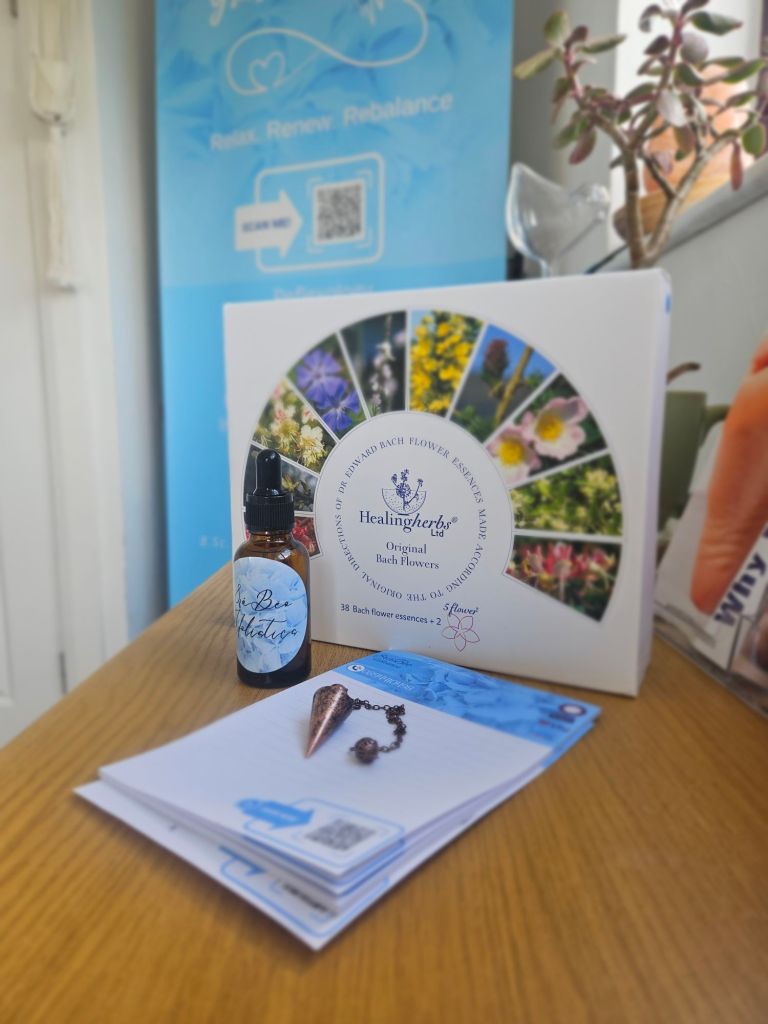
I’ve always known of Rescue Remedy—it was my go-to during exams to combat nerves in secondary school and university, and I’ve used it on and off over the years for different life events. But it wasn’t until I completed the Balanced Health Kinesiology course that I discovered there’s a entire kit of remedies designed to support a wide range of emotions.
Bach Flower Remedies are natural, flower-based preparations developed by Dr. Edward Bach in the 1930s. He believed that emotional imbalances—like fear, worry, or stress—can affect our overall wellbeing, and that flowers can help gently restore emotional harmony. They are not a medical treatment, but a subtle, supportive tool for both adults and children.
Since my introduction to kinesiology, I have learned how to work with the full kit of remedies and integrate them into everyday life. Using kinesiology techniques, I can select a remedy with subtle muscle testing, or tune in energetically with my pendulum. The more remedies I have made up—for myself, my family, and my clients—the more amazed I have been by how accurately the remedies that come up reflect what’s truly going on for the person.
At home, I’ve been using them in small, practical ways. Like I mentioned last week I used them to support our toddler as the school holidays came to an end and he was getting used to his brothers suddenly being gone for half the day. This was a particularly big change for him; especially when he is acutely aware that there is a new sibling on the way. For myself, remedies like Cherry Plum, Rock Rose, and Gentian have helped me release tension, navigate the “what ifs,” and feel steadier around letting go of control; trusting the bus will deliver them safely to and from school and leaning into the not knowing when this baby will arrive – the boys arrived between 37 and 41 weeks. Using them doesn’t feel like a magic fix, but a gentle way to notice and hold space for emotions, slowing down moments and creating small pockets of calm.
It’s remarkable to see how these remedies support subtle emotional shifts. They encourage self-compassion, remind us that it’s okay to feel what we feel, and show that a little gentle support can make transitions feel more manageable.
Get in touch if you would like to know more—I’m always happy to chat.
Le solas agus grá,
Gráinne
x
 GráBeo Holistics by Gráinne Staunton
Leave a comment